
Dog Boarding and Training: What Busy Dog Owners Need to Know
Dog Boarding and Training: What Busy Owners Need to Know Before Leaving Their Dog Behind
For busy people, dog boarding often feels like a necessary convenience.
You have work, travel, family demands, long days, and a dog you care about. You want to know they are safe, well managed, and in good hands while you are away. That should not be a big ask.
The problem is that not all boarding facilities are built with the same understanding of dogs, behaviour, or handling. Many are built around volume, convenience, and the appearance of activity. Lots of dogs. Lots of movement. Lots of stimulation. To the average owner, it can look fun. And it can be.
One of the most common mistakes I see is the belief that more socialization is always better.
It is not.
Dogs do not become better through endless exposure, and forced interaction. They improve through clear communication, routine, appropriate pressure, and an environment that helps them stay regulated.
The result is often a dog that comes home more reactive, more frantic, more tired in the wrong way, or less connected to the owner.
That is not because the dog is bad. It due to over stimulation. A dog’s behaviour is heavily influenced by the environment around them.
When the environment is chaotic, inconsistent, noisy, or flooded with social pressure, behaviour tends to reflect that. A dog that already struggles with arousal, anxiety, impulsivity, or poor boundaries does not improve by being dropped into a system with more of the same. They simply rehearse the wrong patterns.
Capable handling changes that.
In simple terms, dogs thrive when the picture is clear. When they understand what matters, what is expected, and how to find success, their behaviour settles. Their nervous system settles. Their decision-making improves. And that is when training starts to transfer into real life.
My view was built in the real world
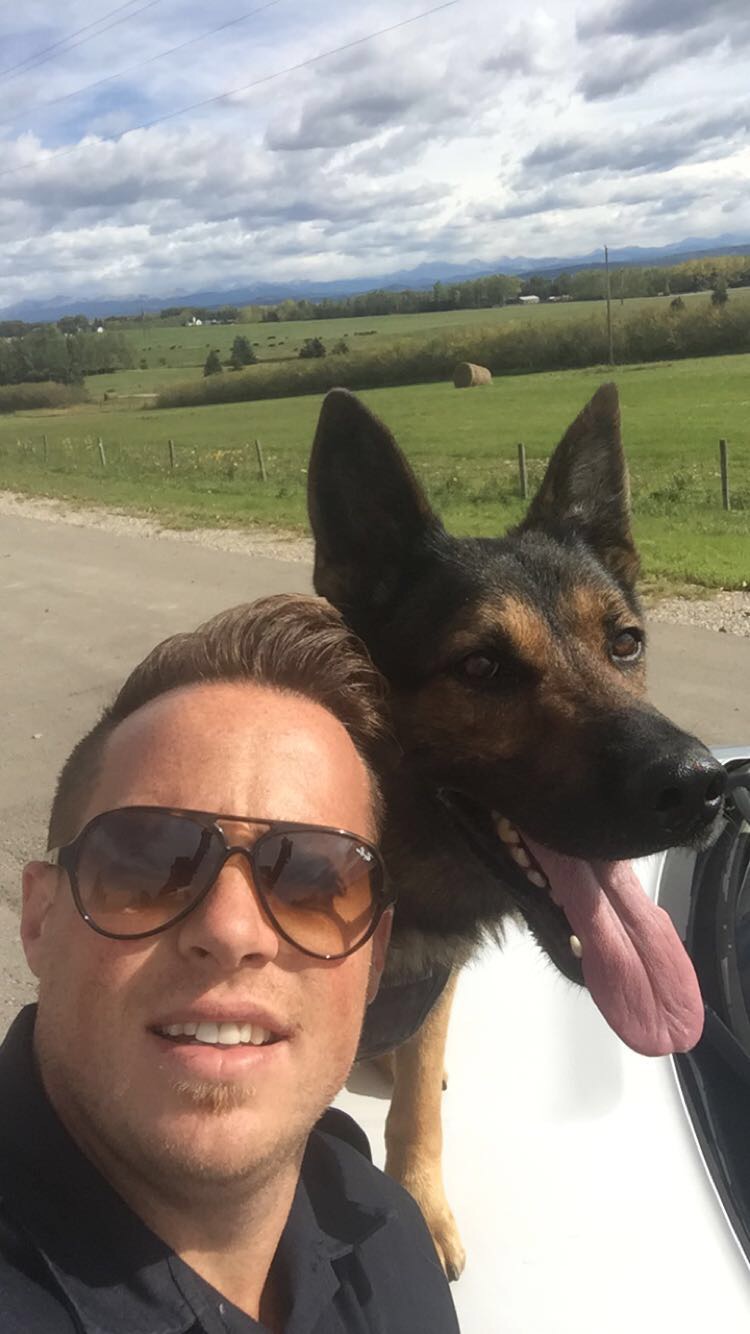
My foundation in dog training did not come from trends. It came from over 20 years of canine work, including years as a law-enforcement K9 handler and trainer, operational deployment experience, civilian pet dog work, behavioural cases, through my mobile training business working with hundreds of owners and their dogs.
Over time, I saw the same pattern again and again.
Most dogs do not need more random activity. They need structure, better timing, and a handler who understands how to communicate with them.
In my mobile training business, I worked with hundreds of dog owners and saw meaningful change happen in as little as three sessions. Not because I was performing magic. Because once the emotional picture changed, once the communication became clearer, and once the right behaviours were conditioned properly, the dog could start succeeding.
That matters in boarding too.
Because boarding is never just about where your dog sleeps. It is about what your dog experiences while they are there.
A higher-standard facility should not feel random.It should be purposeful.
That means a purpose-built environment. Structured programs. Clear goals. Dogs handled by people with knowledge, experience, and mentorship. Not just supervision, but understanding. Not just attendance, but intention.
At Fox K9, that is the standard we are building around.
We believe dogs do best when they are given:
clear routines
clear handling
appropriate structure
fair communication
an environment that supports regulation, not chaos
That applies whether a dog is with us for boarding, day stays, day trains, or a longer board and train program.
Each interaction should build on the last. Each rep should matter. Each dog should be handled as the individual in front of us, not as just another body moving through a system.
Boarding should protect your dog, not set them back
This matters especially for the busy owner.
If you are a professional woman balancing a full schedule, the last thing you need is to pick your dog up from boarding and feel like their behaviour has slid backwards. You should not have to choose between convenience and standards. You should not have to hope your dog was understood. You should not have to undo days of poor handling just because you needed support.
A good boarding and training environment should make life easier, not more complicated.
It should help preserve the habits you care about.
It should support your dog’s stability.
It should reinforce the standards you are trying to live with at home.
That is what real value looks like.
The truth about trust
Trust is the real product in this business.
Owners are not just paying for a kennel, a run, or a few walks. They are trusting someone with a living animal they care deeply about. Often, they are trusting someone with a dog that has quirks, sensitivities, behavioural edges, or a lot of emotional value tied to them.
That trust should be earned.
It should be earned through experience, through knowledge, through clear philosophy, and through a system that reflects all of it.
That is why authority matters.
And authority in this space is not built by sounding polished online. It is built by years under pressure, by working dogs in real environments, by solving problems with pet dogs and families, and by understanding that both ends of the leash need guidance.
Final thought
If you are looking for boarding or training, ask better questions.
Do not just ask where your dog will stay.
Ask how they will be handled.
Do not just ask whether dogs play together.
Ask how arousal, pressure, and overstimulation are managed.
Do not just ask what is included.
Ask what standards guide the environment.
Because the wrong environment can set your dog back.
The right one can support real progress.
That is the difference between containment and care.
And it is the difference between activity and actual value.
At Fox K9, we believe your dog deserves more than a place to stay.
They deserve structure, clarity, and handling that helps them succeed in the real world.
acility, and why structure, clarity, and proper handling matter.

Comments